From the Rig Veda to the Gurus Word: Why Punjab Has Always Been the Worlds Seat of Wisdom
From the ancient hymns of the Rig Veda to the timeless teachings enshrined in the Guru Granth Sahib, Punjab has stood as a beacon of enlightenment for humanity. And honestly? It's about time we talked about it. So grab your chai, settle in, and let's take a journey through the ages, because this story is nothing short of extraordinary!
When you think of Punjab, what comes to mind first? The golden wheat fields? The bhangra beats? The mouthwatering makki di roti and sarson da saag? Sure, all of that is iconic. But here's the thing,Punjab's real treasure runs far, far deeper. We're talking about a land that has been nurturing wisdom,spirituality, and revolutionary thought for over five thousand years!
Yes, you read that right. Five. Thousand. Years.
From the ancient hymns of the Rig Veda to the timeless teachings enshrined in the Guru Granth Sahib, Punjab has stood as a beacon of enlightenment for humanity. And honestly? It's about time we talked about it. So grab your chai, settle in, and let's take a journey through the ages, because this story is nothing short of extraordinary!
Sapta Sindhu: Where Civilization Found Its Voice
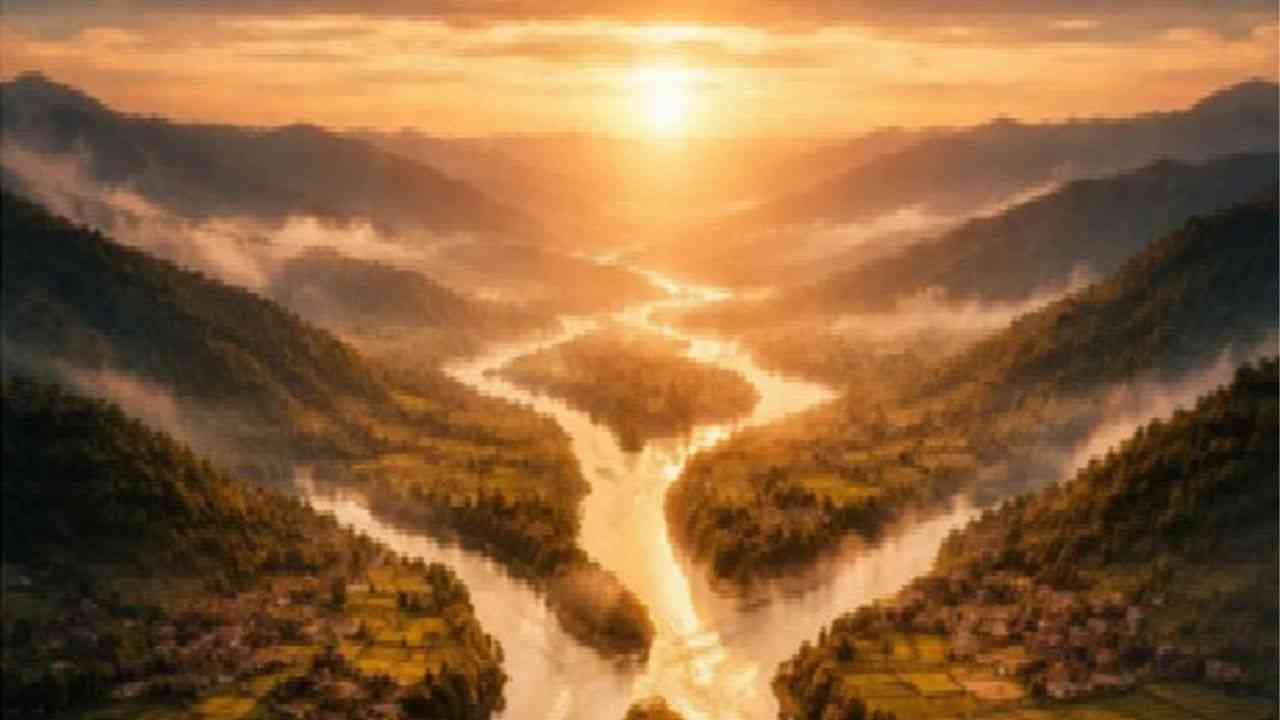
Long before Punjab got its current name (which literally means "Land of Five Rivers"), this region was known as Sapta Sindhu, the Land of Seven Rivers. Picture this: a fertile, river-kissed landscape stretching across what is now Punjab, parts of Haryana, and the northwestern subcontinent. This wasn't just any piece of land. This was the land where some of humanity's earliest and most profound thoughts took shape.
The rivers, Indus, Jhelum, Chenab, Ravi, Beas, Sutlej, and the now-mythical Sarasvati, weren't just water sources. They were lifelines of civilization itself. Settlements flourished along their banks. Trade routes crisscrossed through the region. And most importantly, seekers and sages gathered here to contemplate the biggest questions of existence.
What is life? What is the universe? What is our place in it?
These questions echoed across the Sapta Sindhu region thousands of years ago. And the answers? They became the foundation of human philosophy.
The Rig Veda: Punjab's Gift to World Philosophy
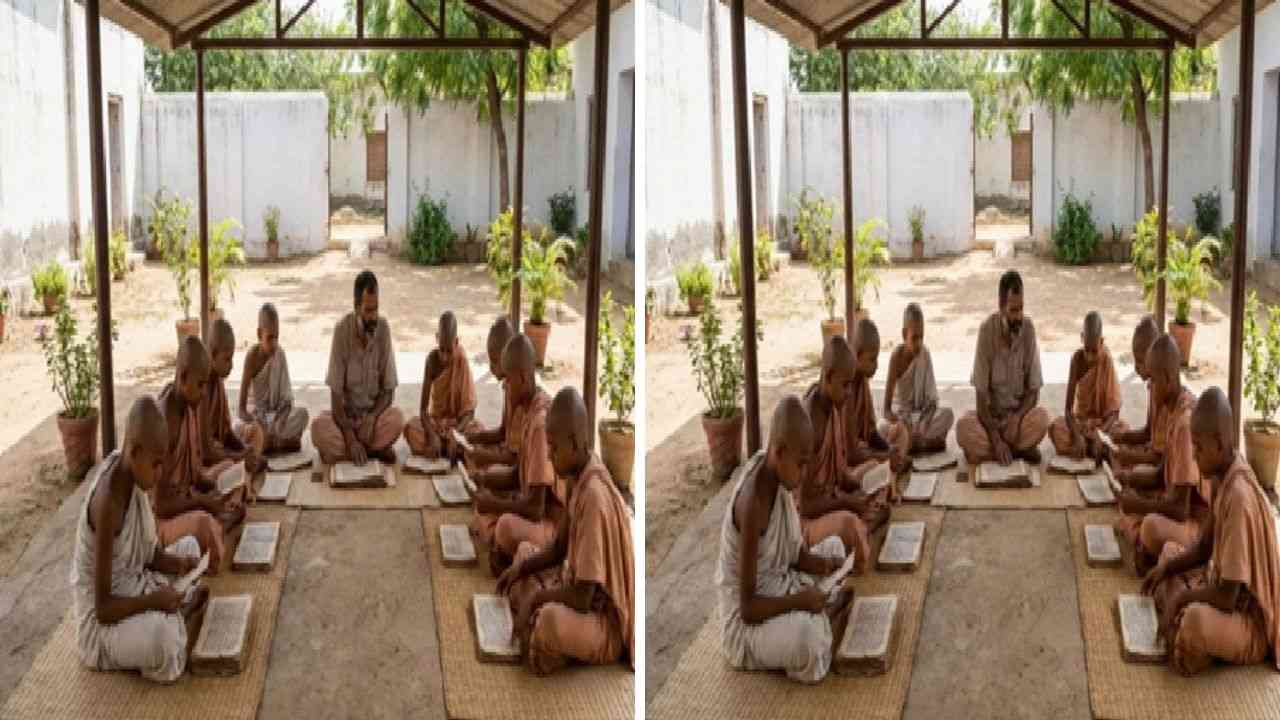
Here's where things get really exciting. The Rig Veda, the oldest known religious text in the world,was composed right here in the northwestern subcontinent, with Punjab and the Sarasvati valley serving as major centers of its creation. We're talking about a period between 1500 and 1000 BCE, when Vedic seers (Rishis) sat along these sacred rivers and composed hymns that would shape spiritual thought for millennia to come.
Now, scholars will tell you (and rightly so) that the Rig Veda's composition spanned a wide geographical area,from the Kabul River region all the way to Gujarat. Different clans contributed different mandalas (books). But there's no denying that the Punjab-Sarasvati region was absolutely central to this incredible intellectual movement.
Think about it. Over 3,500 years ago, while much of the world was still figuring out basic agriculture, the people of this land were asking questions like:
"Who really knows? Who can declare it? Whence was it born, and whence came this creation?" ,Nasadiya Sukta, Rig Veda
That's not just poetry. That's the birth of philosophical inquiry! And it happened right here, on the soil we now call Punjab.
Yes, you read that right. Five. Thousand. Years.
From the ancient hymns of the Rig Veda to the timeless teachings enshrined in the Guru Granth Sahib, Punjab has stood as a beacon of enlightenment for humanity. And honestly? It's about time we talked about it. So grab your chai, settle in, and let's take a journey through the ages, because this story is nothing short of extraordinary!
Sapta Sindhu: Where Civilization Found Its Voice
Long before Punjab got its current name (which literally means "Land of Five Rivers"), this region was known as Sapta Sindhu, the Land of Seven Rivers. Picture this: a fertile, river-kissed landscape stretching across what is now Punjab, parts of Haryana, and the northwestern subcontinent. This wasn't just any piece of land. This was the land where some of humanity's earliest and most profound thoughts took shape.
The rivers, Indus, Jhelum, Chenab, Ravi, Beas, Sutlej, and the now-mythical Sarasvati, weren't just water sources. They were lifelines of civilization itself. Settlements flourished along their banks. Trade routes crisscrossed through the region. And most importantly, seekers and sages gathered here to contemplate the biggest questions of existence.
What is life? What is the universe? What is our place in it?
These questions echoed across the Sapta Sindhu region thousands of years ago. And the answers? They became the foundation of human philosophy.
A Crossroads of Global Thought
Punjab's position as a seat of wisdom didn't end with the Vedic age. Not even close!
For centuries, this region served as a crossroads of civilizations. Greeks, Persians, Central Asians, and countless other cultures passed through, traded, conquered, and, most importantly, exchanged ideas.The ancient city of Taxila (located in what is now Pakistan's Punjab) became one of the world's earliest universities. Students came from across Asia to study medicine, philosophy, mathematics, and the arts.
Chanakya wrote his legendary Arthashastra here. Panini codified Sanskrit grammar here. The Buddha's teachings found fertile ground here. Punjab wasn't just absorbing wisdom, it was actively creating and exporting it to the world!
This tradition of intellectual and spiritual openness set the stage for what would come next: a revolution that would redefine spirituality for millions.
The Sikh Gurus: A New Dawn of Universal Wisdom
Fast forward to the 15th century. The world had changed dramatically, but Punjab's role as a seat of wisdom was about to reach new heights.
In 1469, Guru Nanak Dev Ji was born in Talwandi (now Nankana Sahib, Pakistan). And with his birth came a message so simple yet so revolutionary that it continues to resonate across the globe today:
"There is no Hindu, there is no Muslim. There is only one God, and we are all His children."
Can you imagine saying that in the 15th century? In a world torn apart by religious conflict, caste discrimination, and social inequality, Guru Nanak Ji walked from village to village, spreading a message of oneness, equality, and love. He didn't just preach, he practiced. He sat and ate with people of all castes and faiths. He challenged the powerful. He uplifted the marginalized.
Over the next two centuries, ten Sikh Gurus continued this legacy of wisdom and compassion. Each Guru added to the spiritual and social revolution:
• Guru Angad Dev Ji popularized the Gurmukhi script, making knowledge accessible to common
people
• Guru Amar Das Ji established the langar system, free community kitchens that fed everyone regardless of caste or creed
• Guru Ram Das Ji founded the holy city of Amritsar
• Guru Arjan Dev Ji compiled the Adi Granth and built the Harmandir Sahib (Golden Temple)
• Guru Gobind Singh Ji established the Khalsa and finalized the Guru Granth Sahib as the eternal
Guru
Each step was a stride toward a more just, more enlightened world. And all of it happened right here in Punjab!
The Guru Granth Sahib: A Living Testament to Universal Truth
Now, let's talk about something truly unique in the history of world religions.
The Guru Granth Sahib isn't just a holy book. It's a living Guru. It's a compilation of wisdom that includes not only the teachings of the Sikh Gurus but also the writings of Hindu saints like Kabir and Ravidas, and Muslim Sufis like Sheikh Farid. Think about that for a moment!
In an age when religions often built walls, the Sikh Gurus built bridges. They recognized that truth doesn't belong to any one faith, it belongs to all of humanity.

The Guru Granth Sahib is written primarily in Gurmukhi but incorporates multiple languages including Punjabi, Sanskrit, Hindi, Persian, and more. Its 1,430 pages contain hymns that speak to the soul,about devotion, humility, service, and the oneness of all creation.
And here's the beautiful part: this wisdom isn't locked away in temples. It's sung, recited, and lived every single day in gurdwaras around the world. It's a legacy that breathes, grows, and continues to inspire.
That's the power of Punjab's spiritual heritage!
Why This Matters Today
So why are we at GTC Network so passionate about telling this story?
Because we believe that understanding where we come from is essential to knowing where we're going. Punjab isn't just a land of farmers and fighters (though it's certainly that too!). It's a land of thinkers, seekers, and revolutionaries. It's a land that has asked the deepest questions and offered some of humanity's most profound answers.
In everything we do, from our entertainment content to our storytelling, we strive to honor this incredible legacy. We want to remind our audience that Punjabi culture isn't just about the surface-level stuff (as amazing as that is!). It's about a tradition of wisdom, courage, and compassion that stretches back thousands of years.
Carrying the Torch Forward
Here's the exciting part: this legacy isn't finished. It's not a museum piece. It's a living, breathing tradition that we all get to participate in!
Every time we share a story that celebrates Punjabi heritage, every time we highlight the teachings of the Gurus, every time we remind the world of Punjab's incredible contribution to human thought,we're carrying the torch forward.
And we want you to be part of this journey! Whether you're Punjabi by birth or simply someone who appreciates wisdom and culture, there's a place for you in this story. We love our viewers, and we're so grateful that you're here with us!
Want to know more about who we are and what we stand for? Check out our About Us page. Got thoughts, ideas, or just want to say hello? We'd love to hear from you on our Contact Us page!
From the ancient banks of the Sapta Sindhu to the digital screens of today, Punjab's wisdom continues to flow. And at GTC Network, we're honored to be part of that flow.
Stay connected. Stay inspired. Stay rooted.
Because Punjab's legacy isn't just history( it's our future too!)